
By Martin Mulligan
The Mexican corrido can be read as a long archive of characters embodying different forms of transgression and power. From the nineteenth-century bandit to women occupying positions of command in contemporary drug trafficking, its protagonists have transformed alongside the economic, territorial, and technological conditions that produce them. This genealogy reveals a sequence—bandit, drug trafficker, sicario, narco-junior, and female agent—in which the emergence of a new figure does not erase the previous one. Instead, each new protagonist preserves and reformulates elements inherited from earlier archetypes. The narcocorrido thus operates as a form of popular memory that records these mutations. Corridos_en_la_guerra_contra_el…
The first figure in this genealogy is the bandit. During the nineteenth century, the corrido transformed the border bandit, the benevolent bandit, and the valiente into protagonists of an alternative popular history. In opposition to state authority, these figures could acquire heroic status precisely because they transgressed the established order. The gang, confrontation with government forces, revenge, and violent death formed a narrative repertoire that survived long after the historical circumstances that originally produced it. The corrido preserved these archetypes and transferred them onto new social actors. Corridos_en_la_guerra_contra_el…
During the twentieth century, one of those actors was the drug trafficker. The border between Mexico and the United States became fundamental to this transformation. The smuggler, and later the drug trafficker, occupied the narrative space of the old bandit. The trafficker remained closely associated with the picaresque tradition: he crosses borders, evades authorities, transports prohibited commodities, and prospers through his ability to circumvent the law. This figure would eventually become intertwined with the commercial expansion of norteño music and the consolidation of a cultural corridor connecting Sinaloa and California.
The so-called War on Drugs, however, produced a decisive transformation. Beginning around 2008, the corrido of the picaresque drug trafficker increasingly gave way to a return of the epic, driven by the intensity of violence and warfare among criminal organizations. The sicario moved to the center of the narrative. Manuel Torres Félix, “El Ondeado,” exemplifies this mutation. His corrido saga revives three archetypes of the nineteenth-century bandit—the leader of his own gang, the avenger seeking retribution, and the valiente who confronts a violent death—but inserts them into a contemporary war machine. The old valiente reappears as an operator of necropolitical violence capable of exercising power over territories, bodies, life, and death. Corridos_en_la_guerra_contra_el…
Yet this representation did not remain stable. Rodrigo Aréchiga Gamboa, “El Chino Ántrax,” introduces the narco-junior, an urban and cosmopolitan figure who partially displaces the explicit brutality of the sicario. His story is constructed through a form of meritocracy: although he was not the son of a drug lord, he rose from the lower levels of the organization into the privileged circles of the Sinaloa Cartel. Power, discipline, consumption, travel, and glamour converge in a new “aesthetics of accumulation.” Moreover, this protagonist no longer depends exclusively on the corrido to construct his biography. Social media allows him to become a producer of his own public image. The corrido hero thus enters the age of digital self-representation. Corridos_en_la_guerra_contra_el…
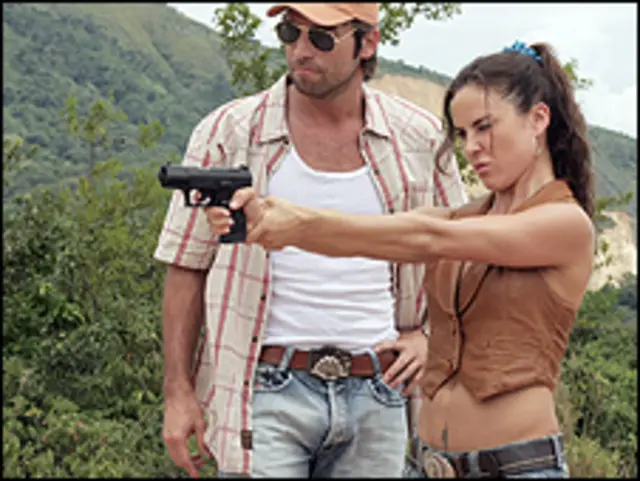
The female agent introduces another disruption. Women had traditionally occupied positions in narcocultural representation subordinate to male protagonists, appearing through categories such as mother-wife, lover, or buchona. The emergence of women as sicarias, operators, or patronas, however, forces the corrido to negotiate with a woman who no longer occupies only the periphery of power. Corridos_en_la_guerra_contra_el… The corrido “En la sierra y la ciudad (La China)” is particularly revealing. It depicts a woman occupying a high position within the drug-trafficking structure and marked by the hyperfemininity of the contemporary buchona, yet it does not simply transform her into a female version of the bloodthirsty sicario. Her power is instead articulated through the picaresque, anonymity, and what I call “strategies of clandestinity.” Corridos_en_la_guerra_contra_el…
This genealogy, therefore, does not describe a linear progression toward increasingly violent characters. Rather, it traces mutations in the representation of power. The bandit defies authority; the drug trafficker evades it; the sicario exercises violence; the narco-junior displays and manages his image; and the female agent combines power and clandestinity within a historically masculine sphere. Even as the protagonist changes, older layers of the picaresque, the epic, the valiente, and the bandit remain embedded within each new figure.
The history of the narcocorrido can therefore also be read as the history of its protagonists. Each figure reveals a different relationship to the state, violence, territory, consumption, and visibility. The corrido does more than sing their lives: it records the cultural transformations of power that made it possible to imagine them.
Leave a Reply