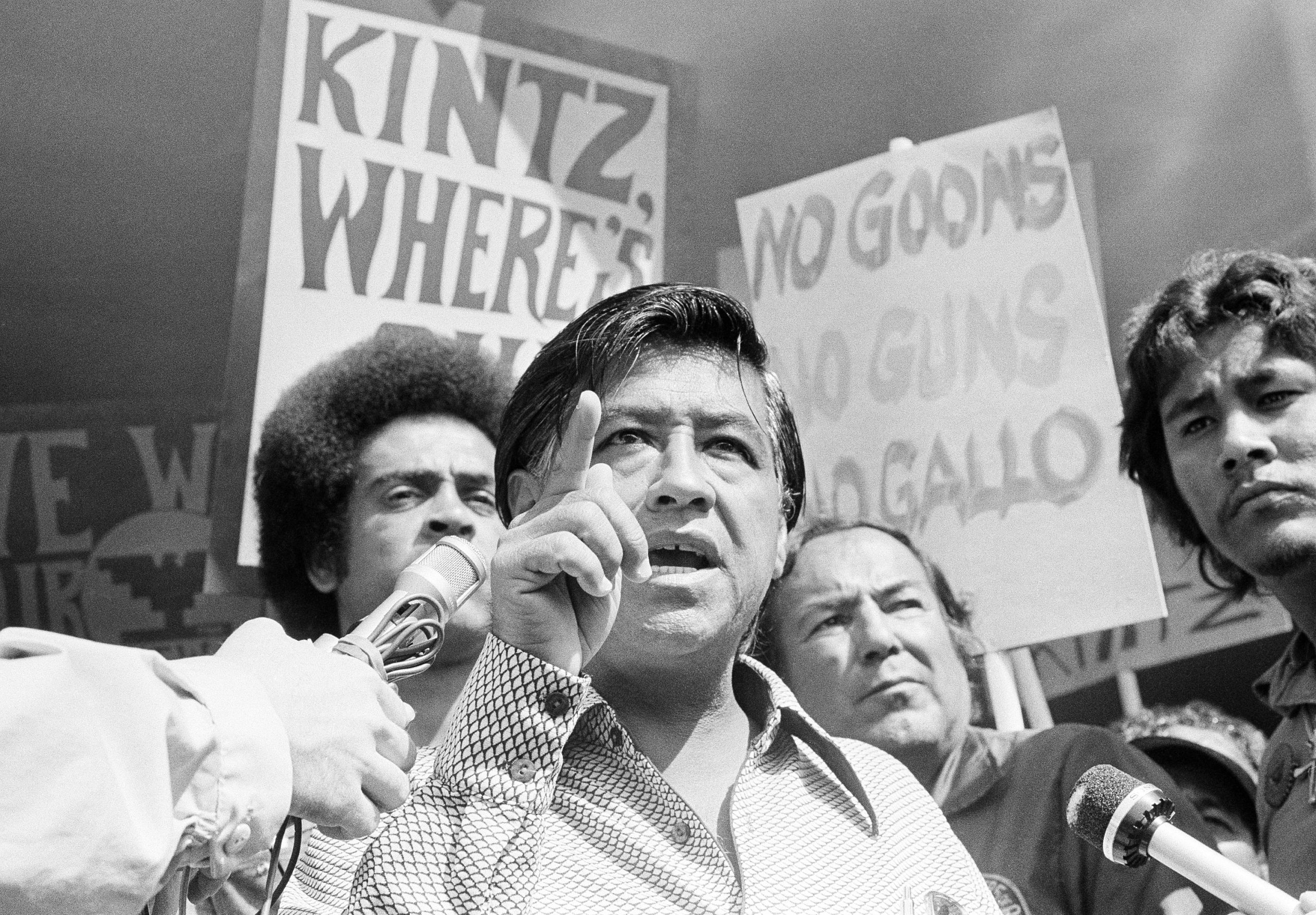
For decades, César Chávez occupied the official archive of Chicano history as an almost unquestionable figure. A farmworker leader, founder of the United Farm Workers, a symbol of labor dignity and nonviolent resistance—his legacy was carefully constructed, repeated, and institutionalized. His name became part of the public landscape—schools, streets, murals—as a settled truth.
That is the archive: what a community chooses to preserve, teach, and legitimize…
But memory is something else.
Memory is not linear, nor stable, nor always visible. It is fragmentary, uncomfortable, and often silent. For years, around Chávez, there appears to have been a zone of silence: stories that did not enter the archive, experiences that were not publicly acknowledged, voices that remained outside the heroic narrative.
What we are witnessing now is not simply the “discovery” of new accusations, but the eruption of that repressed memory into the space of the archive. It is the moment when what was not said begins to be spoken.
And when that happens, the archive can no longer remain intact.
The fall of the “Chicano hero” does not occur overnight. It unfolds as a process of dislocation: the narrative taught for decades can no longer contain the complexity of what is emerging. The figure fractures. It does not disappear, but it is no longer singular.
This creates a fundamental tension: how do we reevaluate a figure who was essential to a community, yet whose legacy now appears marked by previously silenced harm? This is not simply about condemnation or defense. It is about recognizing that the archive was always incomplete.
In this sense, silence was never absence—it was a form of collective memory.
And now, as that silence finds language, it begins to rewrite history.
Leave a Reply